NBA Media Rights Deal: What the £76 Billion Means for UK Viewers and Bettors
 Available in US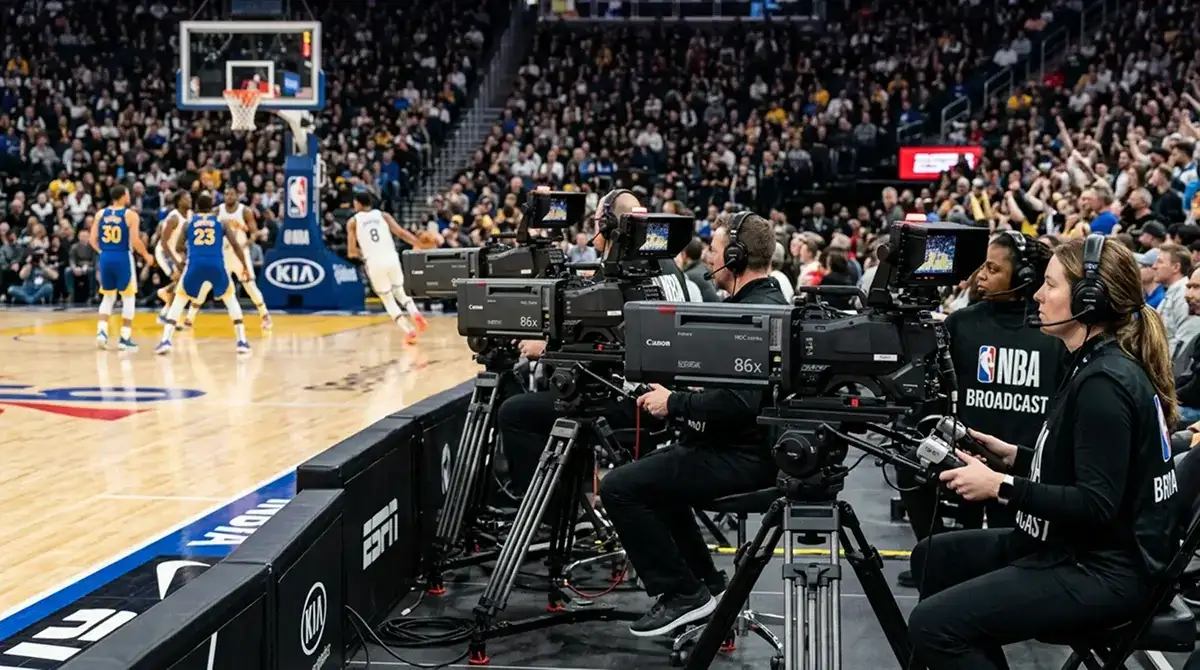
A US deal that ripples into UK living rooms
I get the same question every October from punters who have just read the headline: does the new NBA media-rights deal mean my TNT Sports subscription is about to change? The answer is no, and also yes, depending on the timeframe you care about.
In October 2025 the league finalised a US media-rights package worth roughly $76 billion across 11 years, with NBC, ESPN, Amazon and Peacock splitting the coverage. It is one of the largest sports media deals ever signed, and it ends TNT’s long-running US relationship with the NBA. None of that changes the existing UK rights deal, which sits as a separate agreement and continues to run through TNT Sports for the time being. The mechanical impact on a UK viewer in the 2025-26 season is essentially zero – same broadcaster, same channels, same schedule.
The interesting part is everything downstream of the headline. A US broadcast environment built around two streaming-first partners reshapes the data feeds, the overlay technology, the prop-bet integration and the audience-tracking infrastructure. Some of that filters into the UK product through licensing in subsequent seasons. The US viewership baseline of around 1.53 million average viewers per nationally televised game during the 2024-25 season is the financial floor the deal was priced against, and the UK contribution to global NBA viewership – about 7 per cent of UK internet adults watch – sits inside the broader expansion thesis the league has bet on.
This piece is the working bettor’s read on what the deal does and does not change for UK punters. Numbers in plain terms, the audience knock-on effects, the betting feedback loop the league is building, and what stays unchanged for the UK rights holder for the foreseeable future.
The 11-year, $76 billion package in plain numbers
The headline figure of $76 billion sounds abstract until you break it down. Across 11 seasons, the average is roughly $6.9 billion per year, split unequally between the three primary partners. NBC and Amazon take the larger shares, with ESPN as the third partner; the structural detail is that streaming platforms – Amazon’s Prime Video and NBC’s Peacock – now share parity with traditional broadcast.
For context, the previous US rights deal that the new package replaces was worth approximately $24 billion across nine seasons, or roughly $2.7 billion per year. The new annual average is therefore something like 2.5 times the previous run rate. That is the kind of jump that does not happen by accident. It reflects a league that has demonstrated audience growth, a US sports betting market that has expanded dramatically since 2018, and a pricing discipline among media buyers that values live sports above almost any other content category.
The structure splits Tuesday and Thursday US prime-time slots between NBC and Amazon, with ESPN holding the season-long Wednesday franchise and a meaningful share of the playoffs. NBC returns to NBA broadcasting after a long absence, and the deal covers regular season, playoffs and Finals across the full 11 seasons. Conference Finals rotate between partners on a defined schedule.
Inside the deal are several technology and production commitments that matter more for bettors than for casual fans. Faster on-screen data overlays. Direct integration of prop-bet markets in the US-facing streaming experience. Multi-cam feeds across more games. The Amazon component in particular is built on the model the same company has used for NFL Thursday Night Football, where statistical overlays and predictive graphics have become a standard part of the broadcast.
The UK does not see any of that immediately. The UK rights are licensed separately, and the production tools available to the UK broadcaster derive from the league’s central feed and the UK-specific contractual arrangements. Over time, however, central-feed improvements driven by the US deal flow downstream. If the US partners spend on new camera systems, new tracking technology and new overlay engines, the upstream feed that reaches every international rights holder eventually carries a version of that quality. Two to three seasons is a realistic horizon for that to start showing up in the UK broadcast.
What it could do to NBA viewership in the UK
About 7 per cent of UK internet adults watch the NBA, which is small in absolute terms compared with the Premier League and significant in relative terms compared with most other US sports in the UK. The audience skews young – the NBA captures a higher share of 18 to 34 year-olds than its overall internet-adult percentage suggests – and the trajectory has been upward across recent seasons.
The new US deal is, among other things, a structural bet on continued international audience growth. NBC’s reach, Amazon’s Prime Video user base and Peacock’s streaming infrastructure all mean more potential entry points for casual viewers globally over time. The UK is one of those markets, even if the direct broadcaster remains TNT Sports for the current cycle.
For a deeper data-led read on the UK viewership trajectory, the youth skew and the betting feedback link, I cover the audience side specifically in a dedicated analysis of NBA audience growth in the UK.
The mechanism by which a US deal influences UK viewership is indirect but real. Better US production raises the league’s central feed quality. Better feed quality raises UK broadcast quality. Higher broadcast quality, alongside league marketing investment funded by the new deal, raises casual viewer engagement in markets like the UK. None of this is overnight; all of it is on a multi-year cycle. The UK viewers most likely to convert from casual to engaged are the existing 18 to 34 demographic that already over-indexes on NBA content, and that group is also the one most likely to translate viewing into betting activity.
The honest caveat is that international audience growth has historically lagged the league’s projections. The US-centric model of prime-time scheduling means UK viewers are still watching at uncomfortable hours, and that ceiling is not removed by a US media deal. The more realistic upside for UK viewing is at the margins – a couple of percentage points across the deal’s lifetime – rather than a step change.
Faster data feeds and the betting feedback loop
The phrase that did not appear in any official press release but explains a lot of the deal’s pricing is “betting feedback loop.” Faster, richer data feeds are not just a viewer-experience improvement. They are the input layer for a live-betting market that has grown into a multi-billion-dollar global category.
For a UK in-play bettor, the practical question is whether US-driven improvements in data infrastructure translate into faster or sharper live markets at UK books. The honest answer is partially. UK books primarily price NBA in-play from their own data partnerships and from the central feed the league supplies internationally. As that central feed gets better – more granular tracking, faster event timestamps, more derivative metrics – the books’ models become more precise, and the in-play prices tighten earlier in the play.
Tighter prices are not, on their own, good news for a sharp bettor. The window between an event happening and the market pricing it correctly is where in-play value lives. A faster, smarter market closes that window. Across the deal’s 11-year lifetime, expect UK NBA in-play markets to become progressively harder to beat at the obvious entry points – first-quarter totals after a hot start, momentum-shift overreactions, and the standard set of in-play pivots most casual punters chase.
The compensating factor is that broader product expansion creates new market types where pricing discipline lags. New prop categories, new live-microbets, new cross-game parlay structures all start out mispriced before the books’ models catch up. If you are willing to do the work to find those markets early, the deal’s investment in product expansion creates more of them, not fewer.
The integrity dimension is the part that gets less press attention. More data, faster feeds and integrated betting markets all sharpen the surveillance tools that the league and its regulatory partners use to monitor unusual betting patterns. The Rozier and Billups indictments in late 2025 underscore why that matters – the average UK NBA punter benefits, indirectly, from a market that catches manipulation faster.
What it does not change for UK rights holders
The cleanest way to think about the UK rights position is as a separate, ringfenced agreement. TNT Sports holds the UK NBA broadcasting rights through a contract that runs on its own timeline and is not contingent on the US package. The 250-plus matches per season, the studio shows, the playoff coverage and the Christmas Day slate all continue under the existing terms.
What the US deal does change for UK rights holders is the broader competitive environment. When the next UK NBA rights cycle is negotiated, the bidding takes place against the backdrop of a global media-rights landscape that has been re-priced upward by the US benchmark. UK rights are unlikely to inflate at the same rate, but the floor for UK NBA broadcasting investment moves up rather than down. That is a long-tail consideration rather than an immediate one.
For UK League Pass subscribers, the operational picture is also stable in the short term. League Pass UK pricing at £109.99 per season and £16.99 per month sits independently of the US distribution restructure, and the central NBA digital product continues to be the league’s own. Over time, integration between the league’s digital product and the new US streaming partners may affect what League Pass shows in the UK, but the 2025-26 season runs on the existing model.
Common questions on NBA media rights
Does the new NBA media deal touch the UK broadcast contract?
No, not directly. The US media-rights deal signed in October 2025 restructures US broadcasting between NBC, ESPN, Amazon and Peacock. The UK rights are licensed separately and TNT Sports continues to be the primary UK NBA broadcaster on its existing contract.
Can a faster US data feed give a UK live-bettor any edge?
Marginally and indirectly. As US-driven improvements in tracking and data overlays flow into the league’s international feed across the next two to three seasons, UK in-play markets become more precisely priced – which usually narrows obvious value gaps rather than widens them.
Prepared by the nba Betting Discussion editorial staff.