NBA Quarter and Half Markets for UK In-Play Punters
 Available in US
Why a 12-minute window is its own market, not a slice
The mistake I see most often from punters new to quarter markets is treating them as miniature versions of the full-game line. They look at a first-quarter spread of -2 and assume it is just the full-game -8.5 cut into four equal pieces. It is not. It is a separate market with separate inputs, separate variance, and separate value pockets that simply do not exist on the full-game line.
A 12-minute window in the NBA is short enough that starting lineups, opening rotations, opening play-calls and the first foul situation dominate the outcome. Those inputs do not scale linearly across the four quarters. A team that is a strong full-game favourite because of bench depth and conditioning is not necessarily a strong first-quarter favourite, because their starters might be slower out of the gate or their opening offence might be weaker than their late-game offence. Conversely a team that runs heavy first-unit minutes and posts hot starts will outperform their full-game number specifically in the first quarter and underperform it specifically in the third.
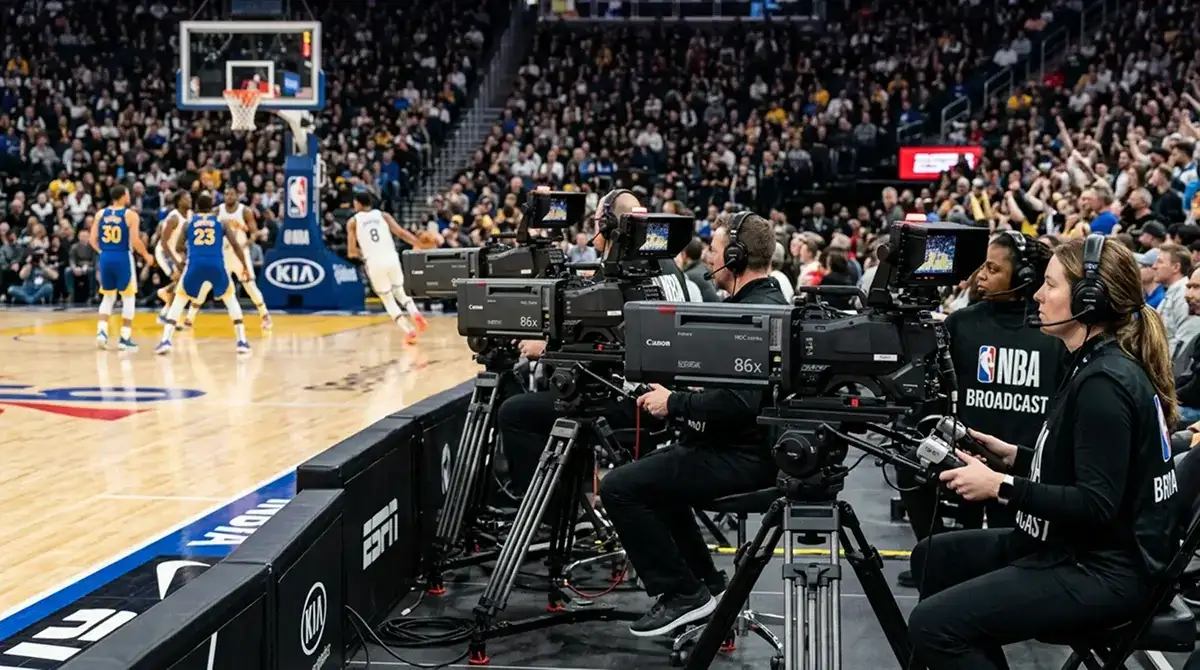
The numbers UK punters bet on these markets are big enough to matter. TNT Sports broadcasts more than 250 live NBA games each UK season – typically nine or more per week, the volume is the point – which means quarter markets are open and live for the entire scheduled stretch from October through June. League Pass, the streaming option for everything else at £109.99 for the full 2024-25 season or £16.99 monthly, opens the rest of the schedule on second screens. Volume is not the constraint; understanding is.
Treating a 12-minute window as its own market is the unlock. Once you do, you stop comparing the price to the full-game number and start comparing it to a model of how that specific window plays. Different inputs, different value, different bets.
First-quarter markets and rotation patterns
First-quarter pricing is dominated by one variable that the full-game number barely cares about: who is on the floor for the opening seven to nine minutes. The starting five of an NBA team plays a heavily front-loaded share of the first quarter, and rotation patterns within that quarter are remarkably stable from coach to coach across a season.
What this means in practice is that the first-quarter spread and total are closer to a starters-versus-starters market than they are to a team-versus-team market. A team whose starting five outscores opponents by, say, plus-eight per hundred possessions but whose bench is minus-three is going to look very different on the first-quarter line than they look on the full-game line. The first-quarter line will price them as the dominant side they are when their starters are out there. The full-game line averages out across all the lineups that play, and that averaging dilutes the starter advantage.
Pace is the other big input. First quarters in the NBA run a touch slower on average than fourth quarters because teams are still feeling the game out and have not yet adjusted defensive game plans, but the spread between teams is wider in the first quarter than across a full game. A high-pace team facing a defensive opponent will play closer to the high-pace team’s tempo in the opening minutes – before the defensive team has fully imposed its preferred pace through fouls, timeouts and substitutions.
The practical edge sits in two places. First, on the first-quarter total when one of the teams runs a deep, slow rotation and the line was set without enough weight on the starting-five tempo. Second, on the first-quarter spread when public pricing has anchored to the full-game number – punters often back the favourite at a first-quarter line that is roughly proportional to the full-game line, which leaves value on the underdog whenever the underdog has a strong first unit and the favourite has a strong bench.
One more thing on first-quarter markets: the pricing reacts very fast to active-or-out lineup news, and slowly to less-public information about how a coach plans to use a returning starter. If a player is officially active but the coach has already told beat reporters they are on a minutes restriction starting in the second quarter, the first-quarter line will not always reflect that immediately. That is a soft window worth watching.
First-half markets: depth, totals and spreads
First-half markets are deeper, more liquid, and behave more like compressed full-game lines than first-quarter markets do. Twenty-four minutes is enough time for substitution patterns to cycle, for both benches to get on the floor, and for both coaches to make at least one tactical adjustment. The result is a market that looks more like a half-priced full game than a doubled first quarter.
That word “half-priced” is doing too much work, though, and a lot of punters get caught by it. The first-half spread is usually wider than half the full-game spread when the favourite has a starter advantage and a bench disadvantage, and narrower than half when the reverse is true. A full-game -10 favourite with a star-heavy first unit might be priced at -5.5 to -6 in the first half, not the -5 that the simple maths would suggest. The half-game spread bakes in the rotation reality that the full-game spread averages out.
Totals work the same way but with an extra wrinkle. NBA scoring distribution across the four quarters is not uniform. Teams typically score most in the first quarter and the fourth, less in the second, and least in the third – that is the league-wide pattern, give or take. The first half captures one of the higher-scoring quarters and one of the lower-scoring quarters, so the first-half total is close to half the full-game total but trends slightly under half on most matchups. If a full game is priced at 232.5, the first half is often around 115 rather than 116.25. That gap is not a mistake; it is the scoring curve.
Liquidity in first-half markets is genuinely good across UK books. The major markets – first-half spread, first-half total, first-half moneyline – are deep enough that you can shop prices across multiple books without running into limits at standard NBA stakes. That makes first-half markets one of the better categories to apply a real line-shopping routine on, because the prices vary meaningfully between books and the volume is high enough that small price differences compound across a season.
The market type I bet most often in this segment is the first-half total. The combination of two scoring environments in a single 24-minute window produces a number that is more stable than the first-quarter total but still differs enough from the full-game total to create independent value. When the full-game total is sitting at a consensus number across the market but the first-half total is offering a softer line because one book has misweighted the rotation, that is a clean shopping opportunity.
Third quarter: the swing market
The third quarter is where coaching adjustments live and where the standard rotation logic from the first half breaks down. Both head coaches have spent the halftime break watching tape, identifying mismatches, and rebuilding the offensive priority list. The opening minutes of the third quarter are often the most distinctive stretch of the entire game from a betting perspective.
Two patterns dominate. The first is the bounce-back: a team that played poorly in the first half comes out of the locker room with a clear adjusted plan and outperforms its first-half pace by a wide margin in the opening five or six minutes of the third. The second is the breakaway: a team that played well in the first half makes a defensive adjustment that compounds their advantage and pulls away early in the third, opening up a lead that they then protect through the fourth.
The market opportunity sits in the third-quarter spread and the third-quarter total, and specifically in the disconnect between those numbers and the live full-game lines. UK in-play feeds usually price the third quarter shortly before it tips, and the price often anchors to the half-time score rather than to the deeper question of which team is more likely to make a productive adjustment. That anchoring is exploitable when you have a read on coaching tendencies.
The third-quarter total has its own quirk worth knowing. League-wide third-quarter scoring runs slightly below first-quarter and fourth-quarter scoring, partly because both teams come back out of the locker room cold and partly because halftime adjustments often emphasise defence. The under is the soft side of the market more often than the over on third-quarter totals – not always, but often enough that the price has to be respected.
UK in-play context: late hours and decision speed
Quarter and half markets are useful for UK punters specifically because they map well onto the late-night viewing schedule that UK NBA fans live with. Most live regular-season games tip at midnight or 1 a.m. UK time, the broadcast windows are predictable, and the decision points in quarter markets – pre-tip, end-of-first, halftime, end-of-third – fall at known clock times that you can plan a betting routine around.
The decision-speed problem is real, though. Live markets at 2 a.m. UK time, with the price moving every few seconds, are a different cognitive environment from pre-match shopping at 8 p.m. The temptation to push stakes up because you are tired and the bet “feels right” is the single biggest leak I see in late-night in-play punters. The defence is having a fixed routine for live decisions – same maximum stake, same maximum number of in-play bets per game, same hard rule about not betting after a certain hour – that you do not let the moment override.
The second-screen logistics matter too. Quarter markets reward quick reactions, and UK in-play menus are best navigated on a phone or second monitor while the game runs on the main screen. The mechanics of how UK punters actually structure those late-night sessions, the realistic stamina arc across a four-game schedule night, and the deeper rules I use to keep the late hours from eroding judgement, are covered in detail in the piece on betting NBA games on late-night UK time. The TL;DR is that quarter and half markets are the right tool for the late-night UK punter precisely because they let you get a stake down without committing to the full four-quarter mental marathon.
Common questions on quarter and half markets
Does first-quarter scoring really predict second-half scoring on NBA games?
The correlation is positive but loose. First-quarter scoring tells you something about the pace both teams are willing to play at, and pace persists across a game more than scoring efficiency does. But coaching adjustments at halftime can flip the second-half pace meaningfully, especially when the first-half pace was driven by one team’s preferred tempo rather than a mutual agreement. Use first-quarter scoring as a pace tell, not as a scoring forecast.
Are half-market spreads always exactly half the full-game spread?
No, and assuming they are is one of the most common mistakes new punters make. Half-market spreads are wider than half the full-game line when the favourite has a starter-heavy advantage, and narrower when the favourite relies on bench depth. The maths only works on teams with very balanced rotations, and very balanced rotations are rare in the NBA.
Prepared by the nba Betting Discussion editorial staff.