TNT Sports NBA Coverage in the UK and What It Means for Bettors
 Available in US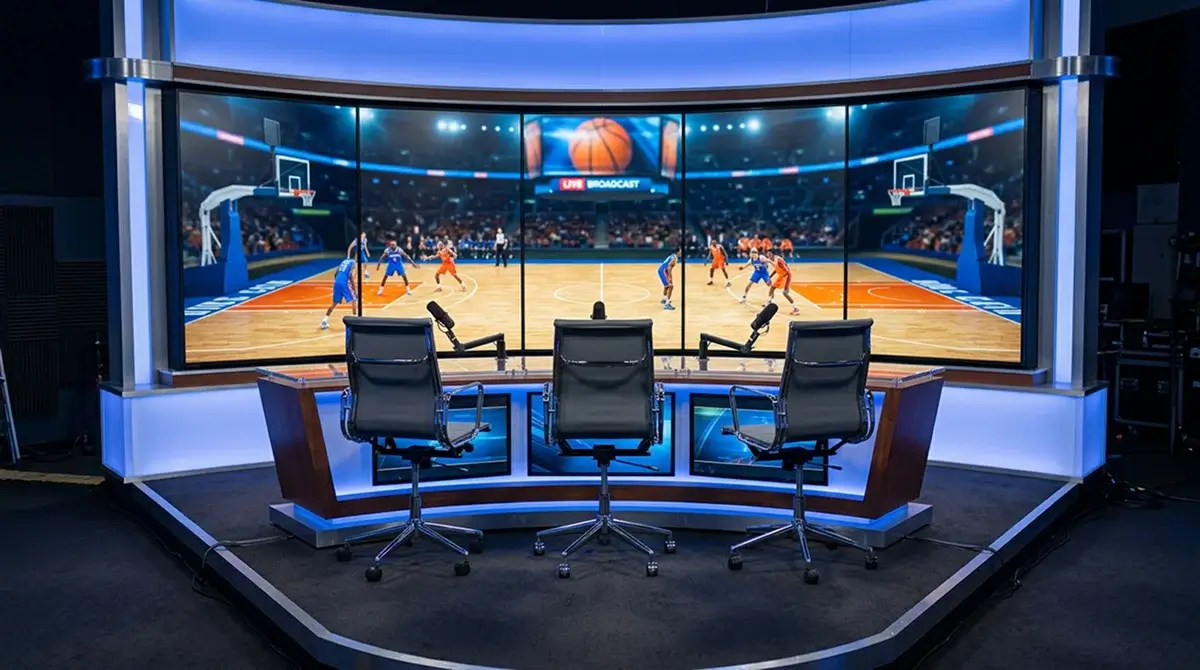
Table of Contents
Why a broadcast schedule shapes a UK betting calendar
I tracked my NBA bets against the broadcast schedule for an entire season once, just to test a hunch. Around 70 per cent of my volume sat on games TNT Sports was carrying live in the UK. It was not a conscious bias. It was the schedule deciding for me which games I researched properly, and the research deciding which games I bet.
This is the part of UK NBA betting that does not show up in any strategy guide. The TNT Sports lineup is not a neutral broadcaster choice – it is, for most UK punters, the gravitational centre of the betting week. More than 250 live NBA matches per season at nine or more games per week, with a clear lean toward marquee fixtures, runs the bigger market the league wants the UK to see. February averages around 1.4 million UK viewers per nationally televised TNT slot, which is the audience size that makes UK books price those games tighter than the overnight Pacers vs Hornets fixture.
For a bettor, the consequence is mechanical. Tighter prices on TNT-broadcast games. Looser prices, and more public mispricing, on games TNT does not show. Deeper props depth on the broadcast slate. Faster line movement on TNT games once a relevant tweet hits the news cycle. None of this is a TNT problem; it is the predictable consequence of where the audience is. Understanding the schedule’s shape is what lets you decide which games to lean into and which to avoid.
What follows is a working bettor’s read of the TNT Sports NBA setup. The volume, the windows, the studio shows, where it overlaps with NBA League Pass, and what the new US media-rights landscape signed in October 2025 is likely to mean for UK viewers over the next decade.
Volume, windows and exclusive games
The headline volume of more than 250 live NBA games per UK season works out to between nine and twelve broadcasts per week through the regular season, climbing into the playoffs where the daily slate runs almost continuously. That is more live NBA on a single UK platform than any other major US sport receives. For comparison, NFL coverage on the same platform sits well below it on a per-week basis through the autumn.
The windows are predictable. The early window of 00:00 to 01:00 GMT covers most of the east-coast tip-offs and represents perhaps half of the TNT broadcasts in a normal week. The middle window from 01:30 to 02:30 GMT carries the central-time games and a portion of the weekday west-coast slate. The late window past 03:00 GMT picks up Pacific-time games and the second half of any double-header night. TNT does not broadcast every game from every window, but the distribution roughly tracks the league schedule.
Exclusivity is where it gets interesting for bettors. A subset of TNT-broadcast games are nationally exclusive in the UK, meaning the only legal live route to that broadcast is through TNT Sports. The Christmas Day slate, opening night, the Cup knockout rounds, and a meaningful share of the playoffs sit in that bucket. League Pass shows those games on a delay or as replays where applicable, so anyone wanting live action is on the linear or streaming TNT feed. The pricing impact is straightforward: more eyes on those games means the books accept more action, which usually means tighter spreads and totals than on a non-exclusive Wednesday game.
The studio inventory matters too. TNT runs pre-game, half-time and post-game coverage on most of the bigger broadcasts, and that information runs ahead of any third-party tip stream. For someone watching the broadcast live, the half-time injury update on a key player is in your screen before it reaches the bookmakers’ content teams in the slowest cases. That window is small and shrinking, but it exists.
What TNT does not give you is depth on every team. The same handful of franchises rotate through the prime broadcast slots. Mid-table teams, the unfashionable matchups and the early-season fixtures involving non-playoff sides receive limited TNT exposure. If your edge is in those games, you need League Pass and TNT in combination – TNT alone will not see them.
Studio shows, expert panels and information edge
The studio panel on a US NBA broadcast is a specific cultural product, and the version that reaches UK viewers through TNT Sports is recognisably the same article. Inside the NBA, the panel show that has run for over two decades, has turned what would otherwise be filler airtime into a genuine source of league-context information.
For a bettor, the question is whether any of that translates into edge. The honest answer is sometimes. The expert panels frequently break injury and rotation news in real time, particularly during half-time of games where a key player has been quiet or appears to be physically struggling. By the time that information reaches the official injury report or the bookmaker’s risk team, the live line has already moved. Five seconds of half-time talk that confirms a star is being held out of the third quarter has shifted lines I was watching.
The flip side is the noise. A lot of panel content is opinion-driven entertainment that adds nothing actionable to a betting position. Hot takes about a coach’s job security, ranking debates, narrative-driven breakdowns of a single play – all of it is good viewing and most of it is irrelevant to a price. A bettor who treats every panel comment as a signal will find themselves chasing line moves that never actually happen.
The half-time interview with a coach is the format that reliably moves prices. Specific comments about minutes restrictions, lineup changes for the second half, or how the medical staff has assessed a player are direct inputs into the in-play market. UK in-play feeds at the major books typically lag those interviews by a few seconds, which is enough time for someone watching live to act before the line catches up.
The broader context is that the NBA’s relationship with sports media is itself part of the story. As Jacobin put it in a piece on the league’s commercial trajectory, “In 2014, [Adam Silver] wrote an op-ed for the New York Times arguing in favor of the legalization of sports betting” – a reminder that the panel-driven, narrative-rich US broadcast aesthetic has been engineered alongside an active commercial interest in keeping people watching, talking and wagering. Knowing that the broadcast is designed to keep you engaged is itself a useful filter when deciding which panel comments to act on.
Where TNT and League Pass differ on the same night
The two products are not redundant, even on a night when they technically cover the same fixture. TNT gives you the linear broadcast, the studio framework and the analyst voice-overs. League Pass gives you alternate camera angles, a stripped-down feed without the studio panel, and condensed-game access the next morning.
For a UK punter, the practical split runs like this. On a TNT-exclusive night you watch TNT and use the panel as part of your in-play research. On a non-TNT night League Pass is your only legal live option, and the value is in the live coverage of games that the bigger audience is not watching. On a night when both carry the same game, TNT for the studio context, League Pass for the multi-cam if you are tracking a specific player.
The latency between feeds is small but real. Both run a few seconds behind the live action on UK in-play markets, with TNT’s linear feed sometimes a touch slower than the streaming version. None of this is fast enough to give you a meaningful arbitrage advantage over the books – the books’ own data is faster – but it is fast enough that watching matters for in-play timing.
The next-morning play is where League Pass quietly outperforms. TNT does not give you reliable on-demand access to the previous night’s games once they have aired. League Pass does, in both full and condensed formats. If your weekly review depends on rewatching games for context, League Pass does that job and TNT does not.
The October 2025 NBC, Amazon and ESPN deal seen from the UK
In October 2025 the NBA finalised a media-rights package worth roughly $76 billion across 11 years, splitting US coverage between NBC, ESPN, Amazon and Peacock. The deal restructures the US broadcasting landscape and ends TNT’s long-running US relationship with the league.
For UK viewers the immediate impact is limited. The UK rights deal sits separately, and TNT Sports remains the primary UK broadcaster of NBA games for the foreseeable future. The US restructure does not, on its own, change which games show up on UK TNT or how many. What it does change is the upstream production environment and the data feeds that flow into the UK broadcast.
The medium-term implications are worth tracking. A more streaming-heavy US broadcast partner means faster data feeds, more interactive overlays, and richer prop-bet integration in the US, some of which will eventually filter into the UK product through licensing. The financial scale of the new deal also signals a league that expects sustained audience growth, which the UK market is part of – TNT Sports’ audience figures and the UK NBA viewership share around 7 per cent of internet adults are part of the bet the league has placed on continued international expansion.
For a deeper financial and strategic read on what the new media landscape means for UK viewers and bettors specifically, I cover that ground in a dedicated analysis of the NBA media rights deal from a UK angle.
Common questions on TNT Sports NBA in the UK
Is every TNT Sports NBA broadcast live in UK time, or is some content delayed?
The vast majority of TNT Sports NBA broadcasts are live in UK time, including all national US prime-time games and the playoffs. Some daytime US games and select replays do air on a delay or in repeat slots, but the headline live volume is the live broadcast figure of more than 250 games per season.
Will the NBC and Amazon deal change what UK viewers see on TNT?
In the short term, no. The new US media-rights deal restructures US broadcasting from the 2025-26 season but does not directly alter the UK rights agreement TNT Sports holds. UK viewers continue to receive the TNT NBA package on the same calendar; longer-term, upstream production changes may affect data overlays and feed quality.
Written by the editors at nba Betting Discussion.