NBA Europe and London: What a 2027 Launch Could Mean for UK Punters
 Available in US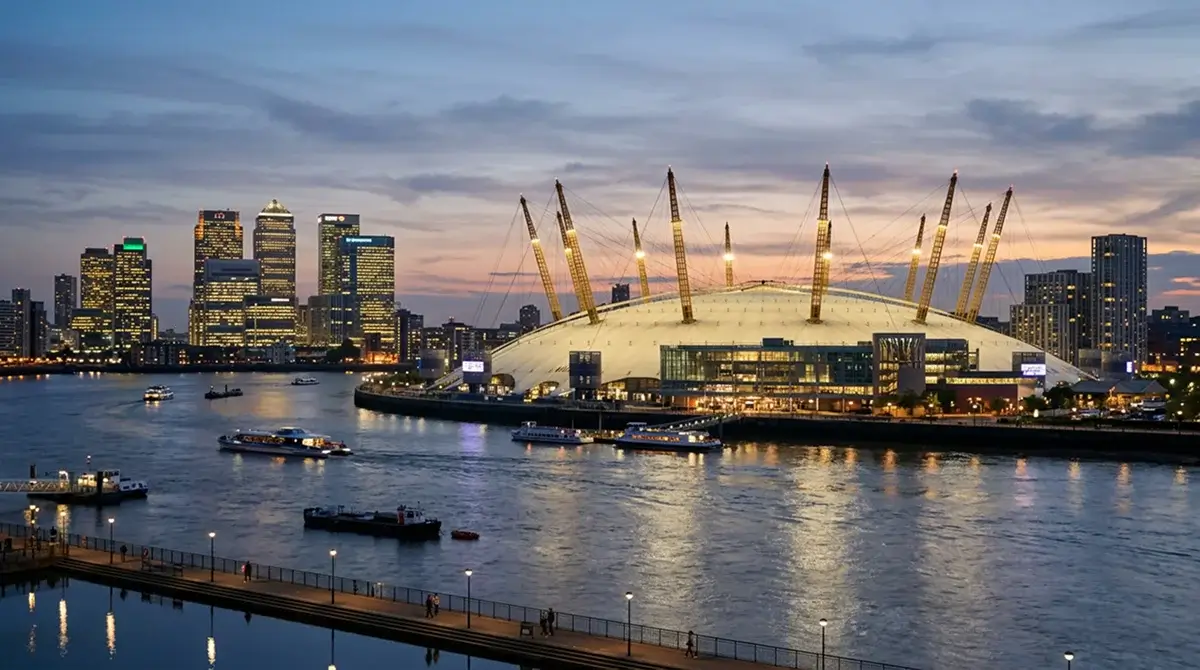
Why London sits at the top of an eight-city shortlist
The first NBA Europe rumour I treated seriously was an off-record conversation with someone in basketball media about the league’s appetite for a London franchise. He told me the league had been quietly working the European market for years, and that London was always going to be on any serious shortlist regardless of how the financial details played out. A year later, the public version of that conversation surfaced.
The current state of play is that the NBA has identified eight candidate cities for an NBA Europe project targeting a 2027 launch, with London prominently among them. Franchise entry fees have been floated in the range of $500 million to $1 billion per team, and the league is reportedly aiming for a 10 to 12 team competition structure. None of those numbers are confirmed in detail, but the broad architecture has been discussed publicly enough by NBA leadership that the framework is real.
For UK punters, the question is what a London-based NBA Europe team would actually mean. Not the marketing version with breathless predictions about the British basketball boom, but the operational version: new betting markets, UKGC implications, scheduling effects, audience knock-ons. The honest answer is that most of those effects are years away from being measurable, and the project itself faces genuine execution risk before any of them materialise.
This piece works through what is currently known. The project status, the franchise economics, the regulatory considerations specific to a UK-based team, and the markets that could plausibly open for UK punters if the launch happens on the proposed timeline. Cautious throughout, because too much of the existing coverage has already promoted a project that has not yet been delivered.
NBA Europe project status and the 2027 target
The NBA’s European ambitions are not new. The league has run preseason exhibition games in European cities for decades, has invested in the Basketball Africa League as a structured franchise model, and has spoken publicly about European expansion across multiple commissioner cycles. What is new in the current cycle is the seriousness of the financial commitment and the specificity of the candidate-city shortlist.
The 2027 launch target is the public timeline, but anyone close to large-scale league launches knows that timelines slip. A 2027 target announced in 2024 and confirmed in 2025 means the actual on-court tip-off could realistically arrive anywhere from 2027 to 2029, depending on facility readiness, ownership-group finalisation, broadcasting deals and regulatory approvals across multiple European jurisdictions.
The eight candidate cities span the major European markets – London, Paris, Berlin, Madrid, Rome, Munich and a handful of others depending on which version of the shortlist is being cited. Two of those slots are likely to come from any single country, and the financial profile of the bidders matters as much as the city’s basketball pedigree. London’s position in the shortlist is bolstered by the size of the broader UK sports market, the existing arena infrastructure, and the international media reach London brings as a host city.
The competition format is the part that has received less scrutiny than the cities. A 10 to 12 team league running across a European calendar has implications that range from practical (travel logistics across countries) to commercial (domestic basketball federations protecting their existing competitions). The relationship between an NBA Europe competition and EuroLeague, the established top-tier European club competition, is one of the unresolved structural questions. A clean cohabitation is possible; so is a messy parallel competition that hurts both products.
Adam Silver’s framing of the project has emphasised continuity with European basketball traditions. He has described wanting to “respect the traditions of European basketball, but also to bring in the combination of old and new” – a calibration that acknowledges that European basketball is not a blank slate and that the NBA cannot simply impose the US franchise model onto a continent with deep existing competitions. How that respect translates into actual competitive structure is one of the operational questions still being worked.
The other unresolved question is broadcast rights. An NBA Europe competition needs domestic broadcasting partners across each home nation, and the UK rights for a London-based team would sit alongside the existing TNT Sports NBA package without obvious overlap. Whether TNT or another UK broadcaster takes the NBA Europe rights remains to be negotiated.
Franchise economics: $500M to $1B entry fees
The financial benchmarks being discussed for NBA Europe entry are striking. Entry fees in the $500 million to $1 billion range per franchise are comparable to the recent expansion fees for new NBA franchises in the US, and they imply a project capitalised at $5 to $10 billion across a 10 to 12 team competition before any operating costs are factored in.
That capital scale is part of why the project is being taken seriously and part of why it is also vulnerable. The ownership groups required to commit at that level are a small set of global investors, sovereign wealth funds and high-net-worth families. Lining up 10 to 12 such groups across European cities, each with the appetite and the regulatory clearance to operate a sports franchise, is the practical bottleneck.
The economics also have to make sense after the entry fee. Operating an NBA Europe franchise involves arena lease costs, player salaries (which would have to be set against EuroLeague’s existing salary structures), broadcasting revenue shares, and a competitive landscape that includes well-established domestic competitions. Basketball is the second most popular team sport in Europe by some participation measures, but the European basketball market currently generates around 1 per cent of the NBA’s global revenue. The growth potential is real; the existing baseline is small.
For a UK ownership perspective, a London franchise at the higher end of the entry-fee range – call it $1 billion – would need to generate sustained operating revenue across broadcast, ticketing, sponsorship and merchandise to justify the investment. London’s media reach and corporate sponsorship base support that case better than most European cities, but the case is not automatic.
UKGC implications of a domestic NBA Europe team
A UK-based NBA Europe team would sit inside the UK gambling regulatory framework in a way that current NBA matches do not. The UKGC regulates UK-licensed operators and the markets they offer; betting on an overseas competition is different in regulatory terms from betting on a competition with home games at a UK arena.
The mechanical implications are several. UK books would be expected to offer markets on a London-based NBA Europe team, with all the standard regulatory requirements around responsible gambling, advertising standards and integrity reporting that apply to existing UK sports. The SGSA-style integrity provisions that already cover Premier League football would extend in some form to a UK-based basketball team, which means structured monitoring of unusual betting patterns, integrity contacts at the league level, and the kind of regulatory transparency that overseas-only competitions do not currently require.
The advertising and sponsorship rules would also apply. UK gambling advertising restrictions around shirt-front sponsorship, the upcoming whistle-to-whistle rules and the general regulatory tightening around gambling marketing would shape what an NBA Europe team’s commercial relationships could look like. A London franchise sponsored by a UK gambling operator on the front of its kit would face the same restrictions a Premier League club currently does.
The integrity dimension matters more than the commercial one. A UK-based franchise within an international competition creates direct UK regulatory jurisdiction over match conduct, which is different from the indirect oversight UKGC currently has over NBA matches played in the US. UK law-enforcement and regulatory agencies would have direct jurisdiction over players, coaches and officials based at the London franchise – a meaningful change from the current arrangement.
Player gambling restrictions are the part that most US-based NBA personnel are familiar with already, and those would extend straightforwardly. UK media-rights deals would build in standard integrity provisions, and any tie-ups with UK sportsbook partners would carry the existing Code of Conduct requirements.
What new markets could open for UK punters
Assuming the project launches on a 2027 to 2029 timeline, the most immediate new market for UK punters would be domestic NBA Europe games involving a London franchise. Match betting, totals, spreads and the standard player-prop suite would appear at UK books from the competition’s first season.
The second-tier markets – futures, head-to-head season props, championship odds – would follow within the first season as the books built up enough sample data to price them confidently. Bet builders on NBA Europe matches would likely start with a smaller leg cap than NBA equivalents, expanding as the books gained operational experience with the new competition.
The interesting structural question is whether NBA Europe markets would price closer to NBA markets or to existing European basketball markets. The likely answer is somewhere in between, with European basketball pricing patterns dominating early and NBA-style market depth catching up over a couple of seasons. The overround on a new competition is typically wider than on an established one, which means early NBA Europe lines would offer more value to disciplined punters than the eventual mature market.
The link between NBA Europe and the existing US-based NBA Cup competition would likely become a topic for cross-competition betting markets in due course. For UK punters interested in how Cup markets are already priced – including bracket structure, group-stage outcomes and the futures angle – the existing Cup competition is covered in a dedicated piece on NBA Cup betting in the UK.
Common questions on NBA Europe and UK betting
Is London officially confirmed as a host city for NBA Europe?
Not officially confirmed in the sense of a binding announcement. London is one of eight candidate cities under serious consideration, with the league publicly indicating that London is among the favoured locations. Final city selection has not been published.
Would a UK-based NBA Europe team have its own betting markets at UK books?
Yes, almost certainly. UK-licensed bookmakers would offer match markets, totals, spreads and player props on a London-based franchise from the launch season, subject to UKGC regulatory requirements that already apply to other UK-based sports.
Written by the editors at nba Betting Discussion.